If someone searches “Italian restaurant near me,” “best tacos in Austin,” or “restaurants open now,” your restaurant has only a short window to make the shortlist.
That is where local SEO matters.
For restaurants, local SEO isn’t simply about adding your city name to a website. It’s about making your restaurant easy for Google to understand and easy for customers to choose.
Your Google Business Profile, Google Maps presence, menu, reviews, website, photos, local reputation, and customer experience all contribute to that process.
Google says local results are primarily influenced by relevance, distance, and prominence. You cannot control how far a searcher is from your restaurant, but you can improve how clearly your business matches a search and how credible and well-known it appears online.
This guide shows you how to build that visibility step by step without relying on keyword stuffing or expensive tactics.

📑 Table of Contents
- What Is Local SEO for Restaurants?
- How Google Decides Rankings
- Optimize Your Google Business Profile
- Choose the Right Restaurant Categories
- Make Your Menu Search-Friendly
- Build a Genuine Review System
- Photos and Videos That Convert
- Optimize Your Restaurant Website
- Target Local Keywords Naturally
- Keep Business Info Consistent (NAP)
- Earn Local Links and Mentions
- Create Content That Helps Customers
- Optimize for Mobile Customers
- Add Structured Data
- Track Actions, Not Just Rankings
- SEO by Restaurant Type
- What Restaurant Owners Should NOT Do
- 30-Day Local SEO Plan
- FAQ
What Is Local SEO for Restaurants?
Local SEO for restaurants is the process of improving a restaurant’s visibility in location-based searches, Google Maps, and other local search experiences so nearby customers can discover, evaluate, and choose the business.
Restaurant local SEO focuses on searches such as:
- “Mexican restaurant near me”
- “best sushi restaurant in Seattle”
- “vegan restaurants downtown”
- “pizza near me”
- “restaurants open now”
- “family restaurants near me”
- “best brunch in Brooklyn”
The important thing about these searches is intent.
Someone searching for a restaurant isn’t necessarily researching the restaurant industry.
They may be deciding:
Where should I eat tonight?
That means local SEO should not stop at getting a restaurant to appear in search.
The goal is to make the restaurant:
Visible → Relevant → Trustworthy → Easy to choose
How Google Decides Which Restaurants Appear in Local Search
Google explains local ranking primarily through three concepts:

1. Relevance
Does your restaurant actually match what the person is searching for?
For example, if someone searches for:
“vegan Italian restaurant”
Google needs enough reliable information to understand whether your restaurant is actually relevant.
Your business category, profile information, website content, menu, and other signals can help establish that relevance.
2. Distance
How close is the business to the searcher or location being searched?
This is important because local SEO isn’t a competition that every restaurant can win from everywhere.
A restaurant in Brooklyn cannot realistically expect to dominate every restaurant search across New York City.
3. Prominence
How well-known is the business?
Google says prominence can be influenced by information such as reviews and links from other websites.
This is why restaurant local SEO is bigger than Google Business Profile optimization.
You are building a local reputation, not just editing a listing.
1. Optimize Your Google Business Profile First
For most restaurants, this is the first place to start.
Your Google Business Profile can show customers:
- Restaurant name
- Address
- Hours
- Phone number
- Website
- Photos
- Menu
- Reviews
- Attributes
- Directions
- Booking options
- Ordering options
Google provides restaurant businesses with tools for managing menu content, menu URLs, photos, attributes, reviews, and Business Profile performance.
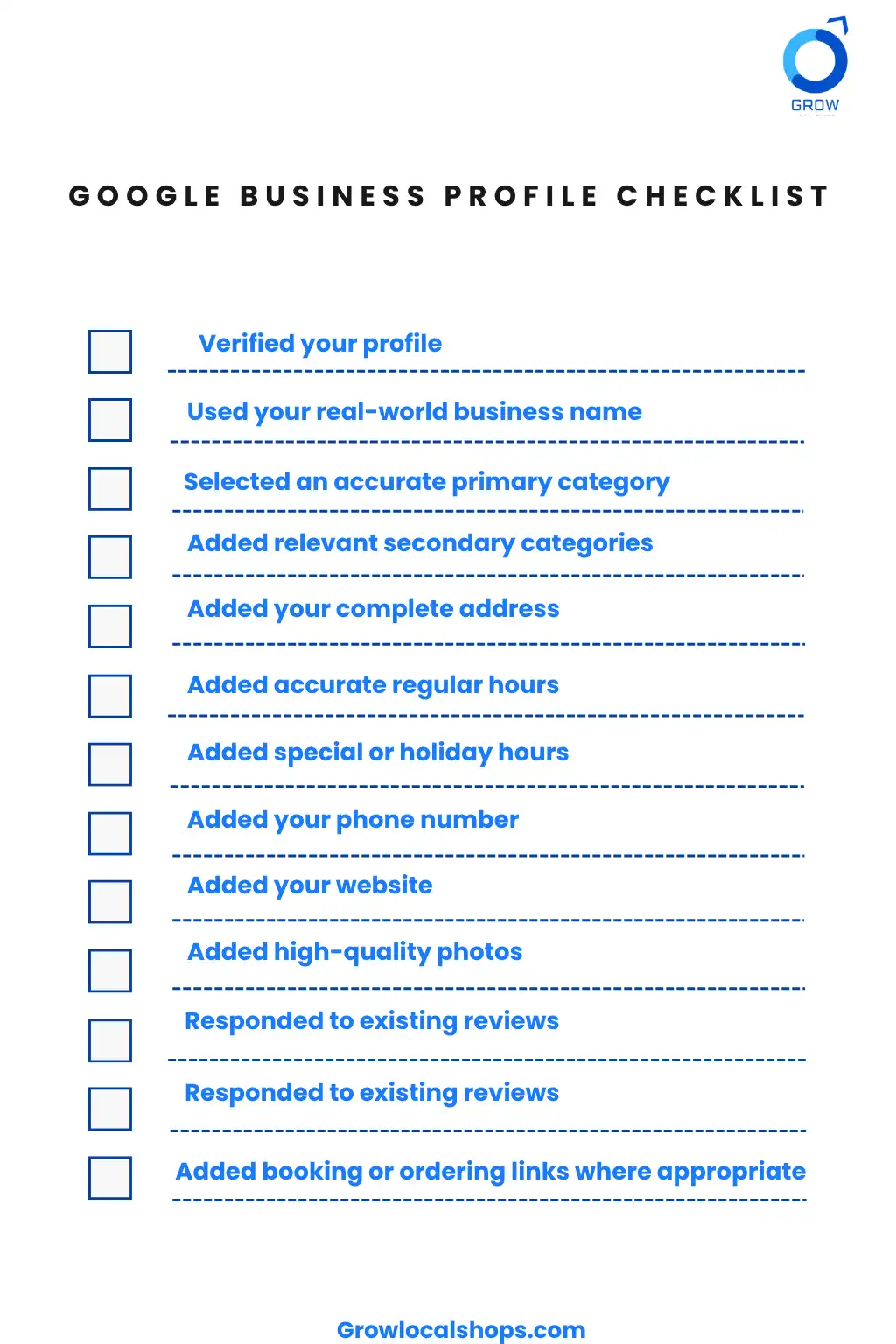
Your Restaurant Google Business Profile Checklist
Make sure you have:
- Verified your profile
- Used your real-world business name
- Selected an accurate primary category
- Added relevant secondary categories
- Added your complete address
- Added accurate regular hours
- Added special or holiday hours
- Added your phone number
- Added your website
- Added your menu
- Added high-quality photos
- Added booking or ordering links where appropriate
- Responded to existing reviews
Download a free and easy checklist to maintain your GBP.
Important: Don’t Stuff Keywords Into Your Business Name
If your restaurant is actually called:
Mario’s Kitchen
don’t change the profile name to:
Mario’s Best Italian Restaurant in Miami Near Me
Use your real-world business name.
Use your category, description, website, menu, and other legitimate business information to communicate what you offer.
A useful rule: If the words aren’t part of the business’s real-world name, don’t add them simply because you want to rank for them.
2. Choose the Right Restaurant Categories
Your Google Business Profile category helps Google understand what your restaurant is.
Don’t automatically choose the most generic category available.
If your business genuinely fits a more specific category, use it.
For example:
- Italian restaurant
- Pizza restaurant
- Sushi restaurant
- Mexican restaurant
- Vegan restaurant
- Cafe
- Bakery
- Seafood restaurant
The important word is accurate.
Don’t select categories simply because you want to appear for them.
GrowLocalShops Recommendation
Think about your category like this:
What would a customer call my business if they were searching for exactly what I sell?
That is usually a better starting point than:
“Which category has the biggest keyword opportunity?”
Your primary category should accurately represent the core business.
3. Make Your Restaurant Menu Search-Friendly
This is one of the most overlooked parts of restaurant SEO.
Imagine someone searches:
“chicken tikka restaurant near me”
If your restaurant serves chicken tikka but your online presence barely mentions it, Google has less information connecting your restaurant with that search.
Your menu provides valuable context.

Your Website Should Have a Real Menu Page
Don’t make the menu impossible to access.
A useful restaurant menu page should clearly communicate:
- Dish names
- Descriptions
- Prices where appropriate
- Cuisine
- Dietary information where relevant
- Menu sections
- Restaurant name
- Location
- Ordering options
- Reservation options
Example
Instead of:
Special #4 — $18
consider:
Chicken Tikka Masala — $18
Grilled chicken cooked in a creamy tomato and spice-based sauce.
Now both the customer and search engine have meaningful information.
Don’t Turn the Menu Into a Keyword List
You don’t need to repeatedly write:
Best chicken tikka in Chicago
Best chicken tikka restaurant Chicago
Chicago chicken tikka near me
Best Indian food Chicago
throughout your menu.
Write for diners first.
Your menu should be useful, readable, and easy to navigate.
4. Build a Genuine Review System
Reviews influence customer confidence and can contribute to your local presence.
But the goal shouldn’t be:
“How do I get 1,000 five-star reviews?”
The better question is:
How can I consistently encourage real customers to share honest experiences?
Google allows businesses to ask customers for reviews, including through a Google review link or QR code. However, offering discounts, free products, or other incentives in exchange for reviews is prohibited.
A Simple Restaurant Review Workflow
Customer visits → Enjoys experience → Receives review request → Leaves honest feedback → Restaurant responds

You can make this easier with:
- QR codes on receipts
- QR codes at the counter
- Follow-up email
- SMS requests
- Post-purchase messages
Respond to Reviews
Don’t just collect reviews.
Respond to them.
For positive reviews:
Thank the customer and acknowledge something specific.
For negative reviews:
Stay calm, acknowledge the concern, and explain how you’re addressing it.
Avoid arguing publicly.
Avoid copying the exact same response to every customer.
A thoughtful response can show future customers that your restaurant pays attention to feedback.
5. Use Restaurant-Specific Photos and Videos
Restaurants are visual businesses.
Your online photos can influence whether someone chooses your restaurant before they ever visit.
Don’t upload only your logo.
Show the actual experience.
Food Photos
Include:
- Signature dishes
- Popular dishes
- Desserts
- Drinks
- Seasonal items
Restaurant Photos
Include:
- Exterior
- Entrance
- Dining room
- Tables
- Bar
- Outdoor seating
Experience Photos
Consider:
- Chef preparing food
- Staff
- Food being served
- Restaurant atmosphere
- Events, where appropriate
Practical Photos
You can also show:
- Parking
- Entrance
- Accessibility
- Menu
- Outdoor seating
Your photos should help answer:
“What will it actually be like if I go there?”
High-quality doesn’t necessarily mean expensive professional photography.
The most important thing is that the photos are authentic, clear, current, and representative of the restaurant. Here’s what good photos look.

6. Optimize Your Restaurant Website
Your Google Business Profile may help someone discover you.
Your website can help them decide.
A restaurant website should make important information obvious.
Put These Details Where Customers Can Find Them
- Restaurant name
- Address
- Phone number
- Hours
- Menu
- Cuisine
- Reservations
- Online ordering
- Location
- Parking information
- Dietary information
- Private dining or event information, if applicable
Make the Phone Number Clickable
On mobile, a customer should be able to tap:
Call
rather than copy a number manually.
Make the Menu Easy to Find
Don’t make visitors navigate through five pages to find:
“Menu”
Put it in your main navigation and make it prominent.
Don’t Forget Mobile
Restaurant searches frequently happen when people are already out, commuting, or deciding where to eat.
Your website should therefore be easy to use on a phone.
Avoid:
- Tiny text
- Slow pages
- Huge image files
- Difficult navigation
- Intrusive popups
- Hidden phone numbers
- Hard-to-find menus
Your SEO strategy shouldn’t generate traffic that your website immediately loses.
7. Target Local Restaurant Keywords Naturally
Keyword research still matters.
But restaurants should think about customer intent, not keyword density.
Consider these keyword patterns.
Cuisine + Location
Examples:
- Italian restaurant in Boston
- Mexican restaurant in Austin
- Sushi restaurant in Seattle
Dish + Location
Examples:
- best ramen in Seattle
- pizza in Brooklyn
- tacos in Austin
Service + Location
Examples:
- restaurant catering in Chicago
- private dining in Boston
- wedding catering in Miami
Attribute + Location
Examples:
- family-friendly restaurant in Denver
- vegan restaurant in Portland
- outdoor dining in Austin
Near-Me Intent
Examples:
- restaurants near me
- pizza near me
- brunch near me
You don’t need a separate page for every variation.
Instead, build useful pages around real customer intent.
For example, a restaurant that offers private dining could have a genuinely useful private-dining page explaining:
- Capacity
- Menu options
- Location
- Pricing or minimum spend
- Event types
- Booking process
- Photos
That is much more useful than creating a thin page that simply repeats:
private dining Boston
twenty times.
8. Keep Your Business Information Consistent
Your restaurant’s core information should tell the same story across the web.
Pay particular attention to:
- Business name
- Address
- Phone number
- Website
- Hours
Check:
- Google Business Profile
- Website
- Major directories
- Social profiles
- Restaurant platforms
- Local business directories
- Relevant industry listings
If an old phone number is still appearing on an important listing, update it.
If your restaurant moved, update the address wherever you reasonably can.
What Is NAP?
You may hear SEO professionals talk about NAP consistency.
NAP stands for:
- Name
- Address
- Phone number
The basic idea is simple:
Make sure important online listings contain accurate information about your business.
Don’t obsess over making every listing’s formatting identical down to every punctuation mark.
Focus on keeping the underlying business information accurate and consistent.
9. Earn Relevant Local Links and Mentions
Backlinks can help build prominence, but restaurant owners don’t need to chase hundreds of random links.
Think locally.
Potential opportunities include:
- Local newspapers
- Food publications
- Neighborhood websites
- Chamber of commerce
- Local events
- Community organizations
- Tourism websites
- Food bloggers
- Local partnerships
- Charity events
- Local business associations
For example, a restaurant sponsoring a local community event might naturally earn:
- A website mention
- Social coverage
- Local press coverage
- A community link
That’s much more meaningful than buying hundreds of unrelated backlinks.
Think Relationships, Not Link Quantity
Ask:
Who already talks about restaurants, food, events, and businesses in my area?
Those are the people and organizations worth building relationships with.
10. Create Content That Helps Local Customers
A restaurant doesn’t necessarily need to publish three blog posts every week.
In fact, I wouldn’t recommend it for most small restaurants.
Create content when it helps customers.
Examples
Before Visiting
What to Know Before Dining at Our Restaurant
Local Intent
Best Places for a Date Night in [Neighborhood]
Occasion Intent
Where to Host a Birthday Dinner in [City]
Dietary Intent
Vegetarian Dining Options at [Restaurant]
Event Intent
Private Dining for Corporate Events in [City]
Seasonal Intent
Best Summer Patio Dining in [City]
The important distinction is:
Don’t create local content just because it contains a city name.
Create it because you have something genuinely useful to say about the area, food, event, or customer experience.
11. Optimize for Mobile Customers
A customer searching for:
“restaurant near me”
may be seconds away from making a decision.
Your digital experience needs to support that urgency.
A mobile visitor should quickly be able to:
See restaurant → Check reviews → View menu → Get directions → Call / Book / Order
Avoid:
- Tiny text
- Slow pages
- Huge image files
- Hard-to-use menus
- Popups covering the screen
- Hidden phone numbers
- Difficult navigation
Think about the customer’s situation.
They may be:
- Walking around a city
- Sitting in a car
- Looking for dinner
- Planning a date
- Looking for lunch near work
- Searching for a last-minute reservation
The website should make the next action obvious.
12. Add Appropriate Structured Data
Structured data can help search engines better understand information about your restaurant.
For an actual restaurant website, appropriate structured data can include a more specific Restaurant subtype of LocalBusiness.
Depending on the website and page, relevant structured data may include:
RestaurantLocalBusinessBreadcrumbList
Structured data can communicate information such as:
- Restaurant name
- Address
- Cuisine
- Opening hours
- Telephone
- Menu
- Other supported business information
Important: Schema Is Not a Magic Ranking Button
Adding structured data doesn’t guarantee higher rankings or a rich search result.
Only mark up information that genuinely exists on the page and follows Google’s structured-data guidelines.
For example, don’t add review markup simply because you want stars in search results.
The markup needs to accurately represent the page.
13. Track Actions, Not Just Rankings
This is where restaurant SEO becomes a business strategy.
Don’t only ask:
“What’s my Google ranking?”
Ask:
“What did people do after finding me?”
Useful metrics can include:
| Metric | Why It Matters |
|---|---|
| Local visibility | Shows whether discovery is improving |
| Website clicks | Measures interest |
| Calls | Strong customer intent |
| Direction requests | Strong physical-visit intent |
| Menu interactions | Measures dining consideration |
| Bookings | Direct conversion |
| Online orders | Direct revenue opportunity |
| Review growth | Measures reputation |
| Organic clicks | Measures website search traffic |
The GrowLocalShops Approach
Think:
Visibility → Engagement → Action → Customer
Not:
Visibility → Screenshot → Celebration
A restaurant can receive thousands of impressions and still generate very few customers.
The goal is not simply more visibility.
The goal is useful visibility that leads to customer actions.
Restaurant Local SEO by Business Type
Not every restaurant should use exactly the same strategy.
Fine-Dining Restaurant
Prioritize:
- Reservations
- High-quality photography
- Reviews
- Cuisine
- Atmosphere
- Private dining
- Occasion-based searches
- Local publications
Casual Restaurant
Prioritize:
- Google Maps
- Menu
- Reviews
- Photos
- Opening hours
- Local keywords
- Directions
- Mobile experience
Cafe
Prioritize:
- Google Business Profile
- Photos
- Coffee and food specialties
- Location
- Outdoor seating where applicable
- Reviews
- Local content
Fast-Food Restaurant
Prioritize:
- Menu
- Location
- Hours
- Ordering
- Google Maps
- High-intent searches
- Mobile experience
Food Truck
Your strategy is different because your physical location may change.
Focus heavily on:
- Accurate current information
- Website and social updates
- Location announcements
- Events
- Menu
- Reviews
- Relevant local communities
Don’t create fake permanent location signals for a business that doesn’t actually operate from a fixed location.
What restaurant owners should NOT do
Don’t Buy Fake Reviews
Fake reviews can damage customer trust and violate Google’s policies.
Never build your reputation around fake customer experiences.
Don’t Stuff Keywords Into Your Business Name
Use the real-world business name.
Don’t Create Dozens of Thin Location Pages
If your restaurant only operates in one neighborhood, don’t create 30 nearly identical pages targeting every nearby suburb.
Create location pages when there is a genuine business reason and enough unique information to make the page useful.
Don’t Create Fake Local Addresses
Local SEO should represent where you genuinely operate.
Don’t Buy Random Backlinks
A hundred irrelevant links aren’t necessarily better than a few genuinely relevant local mentions.
Don’t Obsess Over “Near Me” Keyword Density
You don’t need to write:
“restaurant near me”
throughout your website.
Google understands geographic intent in context.
Don’t Ignore the Actual Customer Experience
If your food, service, hours, and customer experience don’t match your marketing, SEO can’t fix the underlying problem.
Local SEO can help people discover your restaurant.
It cannot make a poor customer experience disappear.
A 30-Day Local SEO Plan for Restaurants
If you’re overwhelmed by all of this, start here.
Week 1: Fix the Foundation
- Verify your Google Business Profile
- Correct your business name
- Choose accurate categories
- Update your address
- Update your phone number
- Update your hours
- Add special hours
- Add your website
- Add your menu
- Check important business listings
Week 2: Improve Customer Trust
- Upload new food photos
- Upload exterior and interior photos
- Respond to existing reviews
- Create a review-request process
- Improve important website information
- Make your phone number clickable
- Make your menu easy to access
Week 3: Improve Search Relevance
- Research restaurant search terms
- Identify important cuisine searches
- Identify local neighborhood searches
- Improve title tags
- Improve menu content
- Improve restaurant and location information
- Add appropriate structured data
Week 4: Build Prominence
- Identify local partnership opportunities
- Contact relevant local publications
- Look for community events
- Create one genuinely useful local content piece
- Review your competitors
- Check Business Profile performance
- Check Google Search Console data
Then repeat the cycle.
Local SEO is not a one-time setup.
It’s an ongoing process of improving relevance, reputation, and customer experience.
Frequently Asked Questions
What is local SEO for restaurants?
Local SEO for restaurants is the process of improving a restaurant’s visibility in location-based searches, Google Maps, and local search results so nearby customers can discover and choose it.
How do I get my restaurant to rank higher on Google Maps?
Start with an accurate and complete Google Business Profile, appropriate categories, accurate hours, useful menu information, quality photos, genuine reviews, and a strong website.
Google says local results are primarily influenced by relevance, distance, and prominence.
Does a restaurant need a website for local SEO?
A restaurant can have visibility through its Google Business Profile without a sophisticated website, but a good website gives you more control over menu information, location details, content, customer actions, and search visibility.
For most restaurants, having a useful website is worth the investment.
How many Google reviews does a restaurant need?
There is no universal number that guarantees a ranking.
Focus instead on consistently earning genuine customer feedback, maintaining a strong reputation, and responding professionally.
Quality and authenticity matter more than chasing an arbitrary review target.
Should restaurants create separate pages for every neighborhood?
Only when there is a legitimate business reason and enough unique, useful information to justify the page.
Don’t create dozens of thin pages simply to target location keywords.
Does restaurant schema improve rankings?
Structured data helps search engines understand page content and can support eligibility for certain search features, but it does not guarantee higher rankings or a rich result.
Only implement structured data that accurately represents the content on the page.
How long does local SEO take for restaurants?
There is no universal timeline.
Results depend on competition, location, existing reputation, website quality, Business Profile health, content quality, and other factors.
A restaurant in a small market may have an easier opportunity than a restaurant competing against hundreds of established businesses in a major city.
Is local SEO worth it for restaurants?
For restaurants that depend on local customers, local SEO can be a valuable long-term marketing channel because it helps the business appear when people are actively searching for places to eat.
The key is to measure customer actions rather than focusing only on rankings.
And remember:
You don’t need to rank #1 for every restaurant search. You need to become highly visible for the searches that actually matter to your restaurant.

Digital marketing professional with a focus on Local SEO, Google Analytics, and Google Business Profile optimization. Founder of GrowLocalShops, where I help local businesses grow through organic search rather than paid ads. Passionate about practical, no-fluff marketing strategies that actually move the needle for small businesses.